August 16, 2023
Success Stories: How Businesses Are Offsetting the Cost of Transitioning to Electric
New Regulations Pose Hurdles for Fleet Owners and Forklift Operators
California’s transportation industry has undergone substantial changes in the past decade, with the Emissions Reduction Plan mandating that all trucks sold in California will be zero-emission by 2040. While the price of new electric trucks has decreased in recent years, electric heavy-duty vehicles can still cost up to $457,000, creating major obstacles as companies across the state work to comply. Along California’s South Coast, the Air Quality Management District (AQMD) imposed the Warehouse Actions and Investments to Reduce Emissions (WAIRE) program to reduce emissions associated with warehouses. This regulation can result in warehouse operators accumulating credits or paying mitigation fees to meet compliance. Under the WAIRE program, warehouse operators can accumulate fines ranging from $10,000 to $350,000 per year for the use of diesel trucks. While these regulations will ultimately lead to a cleaner and more efficient transportation industry, they pose immediate challenges to fleet owners and MHE operators who are concerned about the costs of transitioning to electric vehicles (EVs) and electric forklifts. However, the California Air Resources Board (CARB) – which oversees the implementation of the majority of these regulations – couples these potentially costly regulations with opportunities for fleet owners to mitigate the costs of transition. The Low Carbon Fuel Standard offers fleet owners and MHE operators the opportunity to earn revenue for their reduced emissions, thereby encouraging the widespread adoption of low-carbon and electric vehicles while simultaneously helping to offset the cost of transition.Leveraging LCFS Credits to Meet Compliance
While many operators affected by California’s regulations worry that the cost of transitioning to electric vehicles and forklifts will be too high, operators that have already begun the transition report being able to substantially offset costs with LCFS rebates, as well as a rapid return-on-investment that provides long-term savings. Under the LCFS, fleet owners and MHE operators can earn credits for their reduced emissions, which can be sold to fuel producers struggling to meet emission reduction targets. This program is designed to encourage the widespread transition to electric commercial vehicles and MHE by offering additional revenue streams for EV operators. This additional revenue can substantially offset the costs of electric forklifts, trucks, and charging stations, which are still much higher than traditional internal combustion engine (ICE) vehicles. The LCFS program helps bring down the costs of electric forklifts and trucks to be competitive with traditional ICE vehicles. Similarly, warehouse operators are utilizing electric MHE to offset WAIRE fines. The use of electric yard trucks and forklifts help warehouse operators reach compliance under AQMD regulations and reduce the fines accumulated for using diesel trucks.Long-Term Savings with Electric Charging Stations
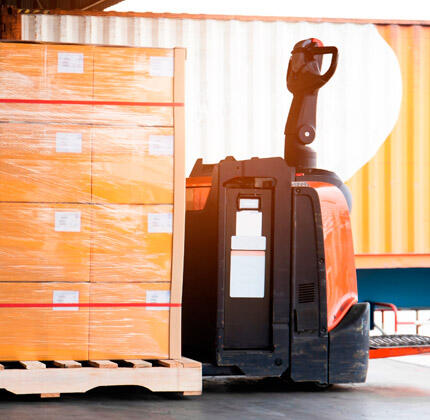 The transition to electric vehicles and MHE also offers a significant return on investment through long-term savings. Electric vehicles and electric forklifts have lower operating costs compared to traditional gasoline or diesel-powered counterparts, as they require less maintenance and benefit from lower electricity prices. Additionally, EVs are more energy-efficient, providing cost savings in fuel consumption over time.
Smart Charging Technologies (SCT) helps fleet owners and MHE operators manage and sell their LCFS credits to maximize their earnings. Through on-site audits, SCT has helped a number of warehouse operators and fleet owners identify areas of improvement in their equipment.
SCT offers credit aggregation services in all states with energy rebate programs, including California, Oregon, Washington, and Canada. By partnering with SCT, you can take the hassle out of generating credits and focus your efforts on your business.
The transition to electric vehicles and MHE also offers a significant return on investment through long-term savings. Electric vehicles and electric forklifts have lower operating costs compared to traditional gasoline or diesel-powered counterparts, as they require less maintenance and benefit from lower electricity prices. Additionally, EVs are more energy-efficient, providing cost savings in fuel consumption over time.
Smart Charging Technologies (SCT) helps fleet owners and MHE operators manage and sell their LCFS credits to maximize their earnings. Through on-site audits, SCT has helped a number of warehouse operators and fleet owners identify areas of improvement in their equipment.
SCT offers credit aggregation services in all states with energy rebate programs, including California, Oregon, Washington, and Canada. By partnering with SCT, you can take the hassle out of generating credits and focus your efforts on your business.
About Us

SCT provides cost-effective telematics and remote power management solutions that optimize motive power fleet and self-service machine efficiency and reduce downtime with essential insights.
Share With Your Network
Popular Posts
Fleet Platform Lock-In: What It Costs You Later
Your Next Equipment Purchase Shouldn’t Be Limited by Which Platform You’re Locked Into Choosing a telematics platform can feel like a software decision. It isn’t, not really. It’s a bet on your future purchasing — a quiet agreement that whatever equipment brand that platform was built around is the brand you’ll keep buying, indefinitely.Most fleet managers…
 Katherine Perez
Charger Intelligence: The Fleet Blind Spot No One Monitors
You Can See Your Trucks. You Can See Your Batteries. Who’s Watching Your Chargers? Ask a fleet manager what they track, and the answer usually comes fast: trucks, obviously. Batteries too, if they’ve been paying attention to run time and charge cycles. Then ask about chargers, and the pause says everything. Chargers are the one…
Katherine Perez
Mixed Fleet Telematics: Why Independent Visibility Wins
If Your Platform Only Sees Its Own Trucks, What’s Watching Everything Else?Walk onto most warehouse floors today and you won’t find a single-brand fleet. You’ll find a reach truck from one manufacturer next to a counterbalance from another, an order picker from a third, batteries from a couple different suppliers, and chargers that were installed…
Katherine Perez
From Study to Savings: What Continuous Fleet Monitoring Actually Finds
The savings aren’t created by the monitoring. They’re revealed by it. Here’s what that looks like in practice — and why the findings consistently surprise even experienced fleet managers. WHAT MOST FLEETS DON’T KNOW THEY DON’T KNOWWalk into almost any warehouse or distribution center and you’ll find a fleet that’s being managed with reasonable care —…
Katherine Perez
Truklink™ Is Here
We talk a lot about clarity at Smart Charging Technologies. Clarity in your data. Clarity in your decisions. Clarity in what your fleet is actually telling you versus what you assumed it was. So it only made sense to apply that same standard to ourselves. Introducing Truklink™ and Truklink PS™ — the next evolution of…
Katherine Perez