July 29, 2023
Pilot Co. Travel Centers Expanding Access to Electric Charging Stations in 2024
Pilot’s Coast-to-Coast Charging Network
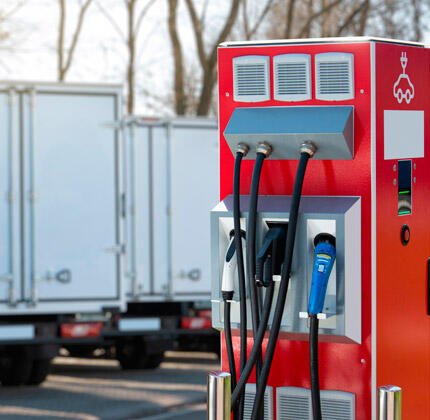 Electric vehicles (EVs) have rapidly grown in usage across the country in recent years, particularly in California, Oregon, and Washington, where energy rebate programs incentivize the adoption of alternative fuels. However, a major obstacle in the widespread uptake of EVs has been the concern that fueling stations are not widely accessible, especially for long-distance travel and commercial trucks. Pilot Co., a petroleum supplier with travel stops and gas stations across the country, has partnered with GM to remedy this issue by installing 2,000 fast charging stations at up to 500 Pilot and Flying J travel centers.
Many of these stations will be located in rural areas that have previously lacked charging stations for electric vehicles, and will be equipped with 350 kW chargers, which can fully charge an electric vehicle in as little as 30 minutes. Additionally, charging stations will be equipped to provide for Class 4, 6, 7, and 8 electric trucks, which will be pivotal in expanding access to long-distance commercial vehicles, which have been limited in their access to fueling stations along the American highway system.
These charging stations won’t be available exclusively at Pilot Co. travel stops, as many more fuel producers are getting on board with electric vehicle charging and alternative fueling stations.
Electric vehicles (EVs) have rapidly grown in usage across the country in recent years, particularly in California, Oregon, and Washington, where energy rebate programs incentivize the adoption of alternative fuels. However, a major obstacle in the widespread uptake of EVs has been the concern that fueling stations are not widely accessible, especially for long-distance travel and commercial trucks. Pilot Co., a petroleum supplier with travel stops and gas stations across the country, has partnered with GM to remedy this issue by installing 2,000 fast charging stations at up to 500 Pilot and Flying J travel centers.
Many of these stations will be located in rural areas that have previously lacked charging stations for electric vehicles, and will be equipped with 350 kW chargers, which can fully charge an electric vehicle in as little as 30 minutes. Additionally, charging stations will be equipped to provide for Class 4, 6, 7, and 8 electric trucks, which will be pivotal in expanding access to long-distance commercial vehicles, which have been limited in their access to fueling stations along the American highway system.
These charging stations won’t be available exclusively at Pilot Co. travel stops, as many more fuel producers are getting on board with electric vehicle charging and alternative fueling stations.
A Changing Landscape for Fuel Producers
As a result of the upward trend of electric vehicles, fuel providers across the country are facing market pressures from consumers and legislation to diversify their products to offer a broader range of transportation fuels. According to a 2022 report by the Boston Consulting Group, approximately 95% of fuel providers in the US plan to offer EV charging stations in the coming years, with many developing plans to offer alternate fuels as well, including biodiesel and renewable diesel fueling stations. Circle K, Wawa, and 7-Eleven, along with many other fuel providers, have already begun installing electric charging stations at their travel stops, many of which do not charge customers for using their charging stations. The upward trend in electric vehicles is likely to continue as EVs outcompete traditional internal combustion engine vehicles in accessibility and affordability. Fortunately, fuel providers are making the appropriate changes to their products and offering a wider range of transportation fuels across the country, making the transition to electric vehicles easier than ever. With these initiatives rapidly changing the transportation industry, it’s easier than ever to transition to electric vehicles. EV fleet owners can even earn additional revenue when switching to EVs through energy rebate programs. Learn more about how you and your fleet can earn: Smart Rebates for EV FleetsAbout Us

SCT provides cost-effective telematics and remote power management solutions that optimize motive power fleet and self-service machine efficiency and reduce downtime with essential insights.
Share With Your Network
Popular Posts
From Study to Savings: What Continuous Fleet Monitoring Actually Finds
The savings aren’t created by the monitoring. They’re revealed by it. Here’s what that looks like in practice — and why the findings consistently surprise even experienced fleet managers. WHAT MOST FLEETS DON’T KNOW THEY DON’T KNOWWalk into almost any warehouse or distribution center and you’ll find a fleet that’s being managed with reasonable care —…
 Katherine Perez
Truklink™ Is Here
We talk a lot about clarity at Smart Charging Technologies. Clarity in your data. Clarity in your decisions. Clarity in what your fleet is actually telling you versus what you assumed it was. So it only made sense to apply that same standard to ourselves. Introducing Truklink™ and Truklink PS™ — the next evolution of…
Katherine Perez
What You Didn't Know About Your Fleet — And What You Can Do With It Now.
When continuous fleet monitoring surfaces something unexpected, the instinct is to question the data. Here’s why that moment is actually the most valuable one in the whole process. WHEN THE NUMBERS LOOK DIFFERENTThe monitoring devices have been running for a few weeks. The data is coming in. And some of it doesn’t match what you expected.A…
Katherine Perez
All-In-One Energy Metering Has Arrived — Introducing the IoTEmeter Series by Smart Charging Technologies
One device. Meter, enclosure, cellular connectivity, and a five-year LTE data plan — all included. Here’s what that means for your operation.Orlando, FL – 5/27/26 — Most energy metering solutions are sold in pieces. You buy the meter from one vendor, the enclosure from another, track down a cellular router separately, and then figure out…
Katherine Perez
You Did the Power Study. Now What?
You ran the study. You sized the batteries. You made the call on chargers — maybe even moved toward lithium. The process was thorough. The recommendations were data-backed. You did exactly what you were supposed to do.So why does something still feel off?Maybe you added a shift since then. Maybe volume picked up faster than…
 Smart Charging Technologies