May 14, 2023
Changes to Washington’s Economy: Understanding the Impacts of the Clean Fuel Standard
Understanding Washington’s Clean Fuel Standard
The Clean Fuel Standard (CFS) was implemented in Washington State in January 2023. The program limits the carbon emissions of petroleum-based fuel suppliers and incentivizes the adoption of low-carbon fuels in the transportation sector. These incentives help Washington fleet owners transition their fleets without financial strain and help prepare the transportation sector for a low-carbon economy. Read more about the Washington CFS: Washington Clean Fuel Standard: Fleet Owner’s Guide The CFS system is based on California's Low Carbon Fuel Standard (LCFS) which was implemented in 2011. Over the past decade, the LCFS has become a major factor in California’s economy by significantly lowering the state’s oil-based fuel usage and diversifying its fuel pool with alternate fuel vehicles. To understand if the CFS will have similar impacts on Washington’s economy, the Washington Department of Ecology conducted an economic impact assessment that analyzed the potential impacts on businesses, industries, and consumers throughout Washington State.Impacts of the CFS on Washington’s Economy
 Under the Clean Fuel Standard, vehicles in Washington State will begin transitioning to low-carbon fuels, with the goal of reducing carbon emissions to 20% below 2017 levels by 2034. As a result of incentivizing low carbon fuel usage, the Washington Department of Ecology predicts that the fuel pool of Washington will drastically change over the next sixteen years, with the following fuels becoming the most prominent throughout the transportation industry:
- Electricity
- Renewable natural gas
- Renewable diesel
- Biodiesel
How Electric Vehicle Fleet Owners Can Benefit
As these changes become prominent across Washington, fleet owners can begin their transition to low carbon vehicles early. Washington will likely experience a rise in gas and diesel over the coming years as a result of the CFS, and switching to electric vehicles will help avoid fluctuating fuel prices. Studies have found that electric vehicles can save fleet owners up to $14,500 per vehicle over 15 years in fuel costs alone. Additionally, the CFS lets EV fleet owners earn one credit for every metric ton of carbon they offset through their reduced emissions. These credits can be sold on a state-wide market to fuel suppliers in a credit deficit, which can act as an additional source of revenue for fleet owners. Values of CFS credits are anticipated to be at their highest in the first few years of the program, so adopting low carbon fuels early will help maximize earnings.
EV fleet owners can take advantage of the CFS by partnering with Smart Charging Technologies, which applies, reports, and sells credits at no additional cost to the fleet owner, letting you earn CFS credits while knowing that your reporting is accurate and managed appropriately. SCT is one of the largest credit aggregators in the country and has extensive experience in other clean fuel programs across Canada and the West Coast. By selling credits in bulk, SCT ensures that you get the highest price for your credits with no hassle, letting you focus on your business and earn the highest revenue for your electric vehicles.
Read more about Washington’s Clean Fuel Standard and how Smart Charging Technologies can help you earn revenue through your electric vehicles:
Additionally, the CFS lets EV fleet owners earn one credit for every metric ton of carbon they offset through their reduced emissions. These credits can be sold on a state-wide market to fuel suppliers in a credit deficit, which can act as an additional source of revenue for fleet owners. Values of CFS credits are anticipated to be at their highest in the first few years of the program, so adopting low carbon fuels early will help maximize earnings.
EV fleet owners can take advantage of the CFS by partnering with Smart Charging Technologies, which applies, reports, and sells credits at no additional cost to the fleet owner, letting you earn CFS credits while knowing that your reporting is accurate and managed appropriately. SCT is one of the largest credit aggregators in the country and has extensive experience in other clean fuel programs across Canada and the West Coast. By selling credits in bulk, SCT ensures that you get the highest price for your credits with no hassle, letting you focus on your business and earn the highest revenue for your electric vehicles.
Read more about Washington’s Clean Fuel Standard and how Smart Charging Technologies can help you earn revenue through your electric vehicles:
Related Posts
 Why Most Motive Power Fleets Are Overbuilt — and Don’t Know It
- How One Tool Sparked SCT’s Telematics Platform
- Why Mixed Fleet Monitoring Breaks Down
- Smart Charging Technologies Unveils the New BATTlink: A Smarter, Slimmer and Simpler Way to Monitor Fleet Batteries
- Switch Always On Secures Patent for Breakthrough Power Management Technology
 Switch Always On Unveils SAO HP, a High-Voltage Remote Power Solution at InfoComm 2025
- Smart Charging Technologies Launches Smart Telemetrics Dashboard: A New Era of Simplicity in Motive Power Fleet Visibility
- Smart Charging Technologies to Unveil the Next Generation of Telematics System Solutions at ProMat 2025
- Maximizing Uptime on a Budget: Compete with Industry Leaders
- Finding the Right Fit: Essential Fleet Insights Without the Extras







About Us

SCT provides cost-effective telematics and remote power management solutions that optimize motive power fleet and self-service machine efficiency and reduce downtime with essential insights.
Share With Your Network
Popular Posts
Why Most Motive Power Fleets Are Overbuilt — and Don’t Know It
Are Electric Forklift Fleets Built for Peak Demand — or Daily Reality? Walk into almost any warehouse or distribution center and you’ll see a motive power fleet built for peak demand. Extra batteries.Extra chargers.Extra trucks. And in many cases, that configuration once made sense. But how often does your electric forklift fleet actually operate at peak demand? Across multiple deployments,…
 Katherine Perez
How One Tool Sparked SCT’s Telematics Platform
From Energy Data to Operational Intelligence: How One Tool Sparked SCT’s Telematics Platform Smart Charging Technologies didn’t start with the goal of building a telematics platform. We started with battery monitoring — because fleets needed a better way to understand how their most critical assets were actually being used day to day. As that work…
Katherine Perez
Why Mixed Fleet Monitoring Breaks Down
If you’re supporting fleets today, chances are they didn’t choose to become mixed.It just… happened.A new battery chemistry introduced to meet demand.A different charger deployed to solve a short-term problem.Incentive-driven upgrades layered onto legacy equipment.None of these decisions were wrong. In fact, most were necessary.What teams didn’t plan for was how quickly mixed fleet monitoring…
Katherine Perez
Smart Charging Technologies Unveils the New BATTlink: A Smarter, Slimmer and Simpler Way to Monitor Fleet Batteries
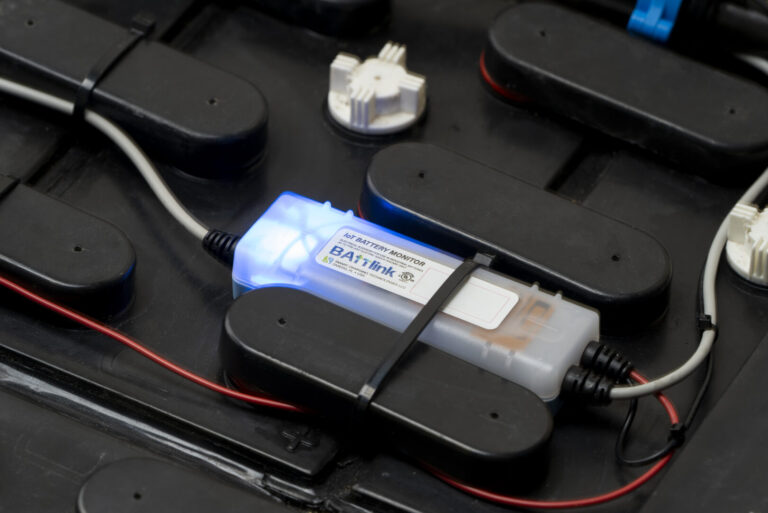
Orlando, FL – 12/16/25 — Smart Charging Technologies (SCT) announces the launch of its newest generation of BATTlink — a compact, cellular battery monitoring solution designed to transform how dealers, OEMs, and fleet operators manage battery health and performance.With a mission to eliminate guesswork from battery management, the redesigned BATTlink features a slimmer profile, our…
Katherine Perez
Switch Always On Secures Patent for Breakthrough Power Management Technology
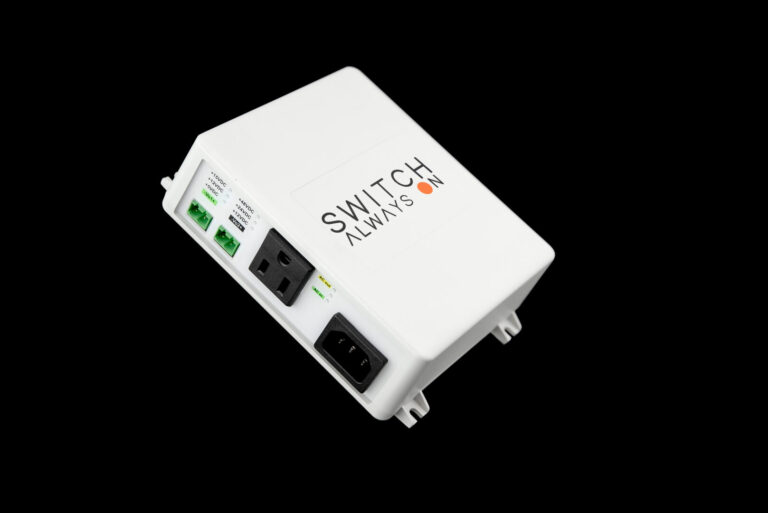
Orlando, FL – July 15, 2025 — Switch Always On powered by Smart Charging Technologies LLC, a leading provider of remote power management and connectivity solutions, is proud to announce the issuance of U.S. Patent No. 12,355,243 titled: “Multiport Power Management System With Battery And Connectivity Backup Capabilities And Related Methods.” This patent recognizes the…
Katherine Perez