July 23, 2023
New York's Clean Fuel Standard: An Introduction
New York State’s Clean Fuel Standard
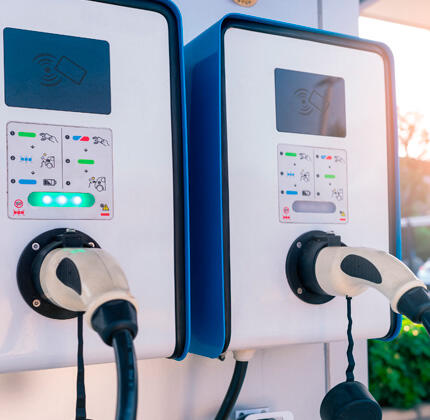 On June 8, 2023, the New York State Senate passed a bill to expand low-carbon and alternate fuel options across New York State. The bill, which requires approval from the governor before it becomes law, would establish the Clean Fuel Standard of 2023, which would introduce an energy rebate program that would allow electric vehicle (EV) owners to earn revenue based on their reduced carbon emissions.
Modeled after California’s Low Carbon Fuel Standard, the NY CFS is a market-based policy that would set a baseline for the carbon intensity (CI) of transportation fuels. The program would require fuel suppliers to gradually reduce the carbon content of their products, thereby driving the adoption of cleaner alternatives. The CFS aims to substantially reduce the CI of transportation fuels to reduce New York State’s carbon emissions, with the goal of reducing the CI of on-road vehicles to 20% by 2031.
Similar to existing clean fuel programs in California, Oregon, and Washington, the New York Clean Fuel Standard would provide fuel suppliers with fuels below the target CI the opportunity to earn rebates for their reduced emissions, encouraging the widespread adoption of low-carbon fuels across the state.
On June 8, 2023, the New York State Senate passed a bill to expand low-carbon and alternate fuel options across New York State. The bill, which requires approval from the governor before it becomes law, would establish the Clean Fuel Standard of 2023, which would introduce an energy rebate program that would allow electric vehicle (EV) owners to earn revenue based on their reduced carbon emissions.
Modeled after California’s Low Carbon Fuel Standard, the NY CFS is a market-based policy that would set a baseline for the carbon intensity (CI) of transportation fuels. The program would require fuel suppliers to gradually reduce the carbon content of their products, thereby driving the adoption of cleaner alternatives. The CFS aims to substantially reduce the CI of transportation fuels to reduce New York State’s carbon emissions, with the goal of reducing the CI of on-road vehicles to 20% by 2031.
Similar to existing clean fuel programs in California, Oregon, and Washington, the New York Clean Fuel Standard would provide fuel suppliers with fuels below the target CI the opportunity to earn rebates for their reduced emissions, encouraging the widespread adoption of low-carbon fuels across the state.
How the New York Clean Fuel Standard would Impact Fleet Owners
Under the CFS, New York State-based providers of low-carbon fueling stations–-including owners of electric vehicle charging stations—would be eligible to generate credits based on their reduced carbon emissions. Credit generators, such as EV fleet owners with on-site charging stations, would be able to earn revenue by selling credits to fuel suppliers who are unable to meet the carbon intensity targets on their own, thereby earning additional revenue through their vehicle usage. This market-based approach, which has proven to be effective by existing programs, promotes the adoption of low-carbon fuels across the state while reducing the carbon intensity of oil-based transportation fuels.Moving Forward
The NY CFS passed the State Senate on June 8, 2023 and is currently moving on to the State Assembly. The program is expected to be approved by the governor early next year and fully implemented as early as 2024. Upon the adoption of the NY CFS, owners of electric vehicle charging stations will be eligible to earn credits for their reduced carbon emissions. Credit generators can partner with Smart Charging Technologies to ensure they earn the highest possible credits with minimal hassle. Read more about which states have existing clean fuel standards, or are considering implementing a program: Which States Have a Low Carbon Fuel StandardAbout Us

SCT provides cost-effective telematics and remote power management solutions that optimize motive power fleet and self-service machine efficiency and reduce downtime with essential insights.
Share With Your Network
Popular Posts
SCT Launches SCORE: Motive Power Fleet Savings Program
SCT’s new managed service pairs a free equipment audit with a dedicated Fleet Analyst — built to give operators a clear, continuous answer on total cost of ownership, without adding another system to learn and maintain. Know Your SCORE.Own Your Savings. Smart Charging Technologies (SCT), an independent provider of motive power fleet intelligence, today announced…
 Katherine Perez
Retrofit Telematics: Add Visibility Without Replacing Equipment
Switching Platforms Shouldn’t Mean Replacing Equipment That Isn’t Broken There’s a quiet assumption built into a lot of telematics conversations: that better visibility means new equipment. New chargers, new batteries, a system torn out and swapped for another. For a lot of fleet managers, that assumption alone is enough to shelve the conversation entirely…
Katherine Perez
Fleet Platform Lock-In: What It Costs You Later
Your Next Equipment Purchase Shouldn’t Be Limited by Which Platform You’re Locked Into Choosing a telematics platform can feel like a software decision. It isn’t, not really. It’s a bet on your future purchasing — a quiet agreement that whatever equipment brand that platform was built around is the brand you’ll keep buying, indefinitely.…
Katherine Perez
Charger Intelligence: The Fleet Blind Spot No One Monitors
You Can See Your Trucks. You Can See Your Batteries. Who’s Watching Your Chargers? Ask a fleet manager what they track, and the answer usually comes fast: trucks, obviously. Batteries too, if they’ve been paying attention to run time and charge cycles. Then ask about chargers, and the pause says everything. Chargers are the one…
Katherine Perez
Mixed Fleet Telematics: Why Independent Visibility Wins
If Your Platform Only Sees Its Own Trucks, What’s Watching Everything Else?Walk onto most warehouse floors today and you won’t find a single-brand fleet. You’ll find a reach truck from one manufacturer next to a counterbalance from another, an order picker from a third, batteries from a couple different suppliers, and chargers that were installed…
Katherine Perez