March 15, 2024
New LCFS Legislation Across the US
Low carbon fuel standards (LCFS) have been gaining popularity in recent years, with programs in Washington, Oregon, and California pushing the widespread adoption of electric and low carbon vehicles.
These programs, also known as energy rebate programs, aim to reduce greenhouse gas emissions from the transportation sector by offering market-based incentives to fleet owners who transition to electric. Under an LCFS program, fuels are assigned a carbon intensity score, which rates fuels on their lifecycle emissions—cleaner fuels like electricity receive lower scores, while traditional fuels like gas and diesel receive higher scores. Fleet owners who adopt low CI vehicles earn credits for their emission reductions, which can be sold to fuel producers for additional revenue.
The success of West Coast states’ LCFS programs has prompted other states across the US to implement their own legislation, including:
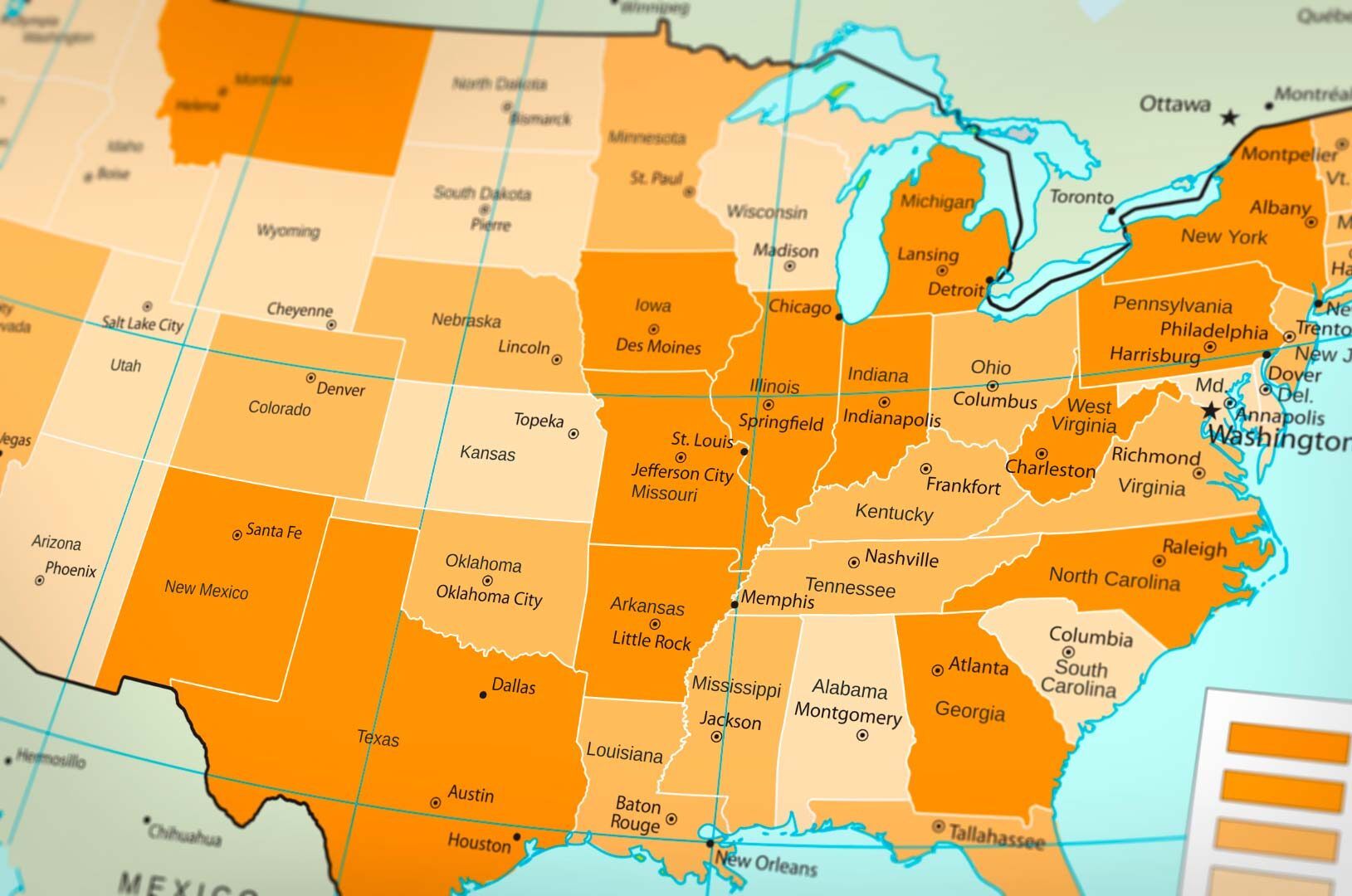
New Mexico
New Mexico signed the Clean Fuel Standard into law on March 5, 2024, becoming the fourth state in the US to do so. This program will specifically target fuel producers, rewarding producers and importers of low-carbon transportation fuels with credits that can be sold to producers of high-carbon transportation fuels.
The new CFS aims to lower the CI of New Mexico’s fuel to 20% by 2030 and 30% by 2045, while stimulating diversified fuel pools, transportation infrastructure, and technological advancements.
In the coming months, the New Mexico Environment Department (NMED) will begin the rulemaking process that will detail the market-based incentives of the Clean Fuel Standard. Stay tuned for updates as new regulations are announced.
New York
In New York, the draft Clean Fuel Standard (CFS) of 2024 is under review by the Environmental Conservation Committees of both legislative chambers. With bills SB1292 and AB964 spearheading the initiative, New York aims to establish a framework that encourages the use of cleaner fuels across the state through market-based incentives.
The 2024 legislative session draws to a close on June 6th, at which point the program will await approval from the governor before being signed into law.
Learn more about New York’s Clean Fuel Standard: New York's Clean Fuel Standard: An Introduction
New Jersey
Earlier this year, New Jersey legislation introduced Senate Bill 2425, currently known as the Low Carbon Transportation Standard. The New Jersey Department of Environmental Protection is in the process of establishing annual baseline reductions for high-carbon fuels, incentives for users of low-carbon fuels, and enforcement standards.
Illinois
Illinois’ SB1556 aims to establish the Clean Transportation Standard, which would incentivize the adoption of low-carbon fuels across the state, particularly for medium- and heavy-duty. The bill is currently awaiting its first hearing with the Illinois Senate.
Hawai’i
Hawai’i’s HB2297 and SB2768 bills seek to establish the Clean Fuel Standard for the state. Both bills have passed from their first committees and are scheduled for decision-making later this year.
As more states develop legislation for clean fuel programs, stay up-to-date with regulatory changes and learn more about how Smart Charging Technologies can help you navigate these rebate opportunities.
About Us

SCT provides cost-effective telematics and remote power management solutions that optimize motive power fleet and self-service machine efficiency and reduce downtime with essential insights.
Share With Your Network
Popular Posts
Retrofit Telematics: Add Visibility Without Replacing Equipment
Switching Platforms Shouldn’t Mean Replacing Equipment That Isn’t Broken There’s a quiet assumption built into a lot of telematics conversations: that better visibility means new equipment. New chargers, new batteries, a system torn out and swapped for another. For a lot of fleet managers, that assumption alone is enough to shelve the conversation entirely — the…
 Katherine Perez
Fleet Platform Lock-In: What It Costs You Later
Your Next Equipment Purchase Shouldn’t Be Limited by Which Platform You’re Locked Into Choosing a telematics platform can feel like a software decision. It isn’t, not really. It’s a bet on your future purchasing — a quiet agreement that whatever equipment brand that platform was built around is the brand you’ll keep buying, indefinitely.Most fleet managers…
Katherine Perez
Charger Intelligence: The Fleet Blind Spot No One Monitors
You Can See Your Trucks. You Can See Your Batteries. Who’s Watching Your Chargers? Ask a fleet manager what they track, and the answer usually comes fast: trucks, obviously. Batteries too, if they’ve been paying attention to run time and charge cycles. Then ask about chargers, and the pause says everything. Chargers are the one…
Katherine Perez
Mixed Fleet Telematics: Why Independent Visibility Wins
If Your Platform Only Sees Its Own Trucks, What’s Watching Everything Else?Walk onto most warehouse floors today and you won’t find a single-brand fleet. You’ll find a reach truck from one manufacturer next to a counterbalance from another, an order picker from a third, batteries from a couple different suppliers, and chargers that were installed…
Katherine Perez
From Study to Savings: What Continuous Fleet Monitoring Actually Finds
The savings aren’t created by the monitoring. They’re revealed by it. Here’s what that looks like in practice — and why the findings consistently surprise even experienced fleet managers. WHAT MOST FLEETS DON’T KNOW THEY DON’T KNOWWalk into almost any warehouse or distribution center and you’ll find a fleet that’s being managed with reasonable care —…
Katherine Perez