March 15, 2024
Summary of the Q3 2023 CARB LCFS Report
Q3 2023 Data Summary
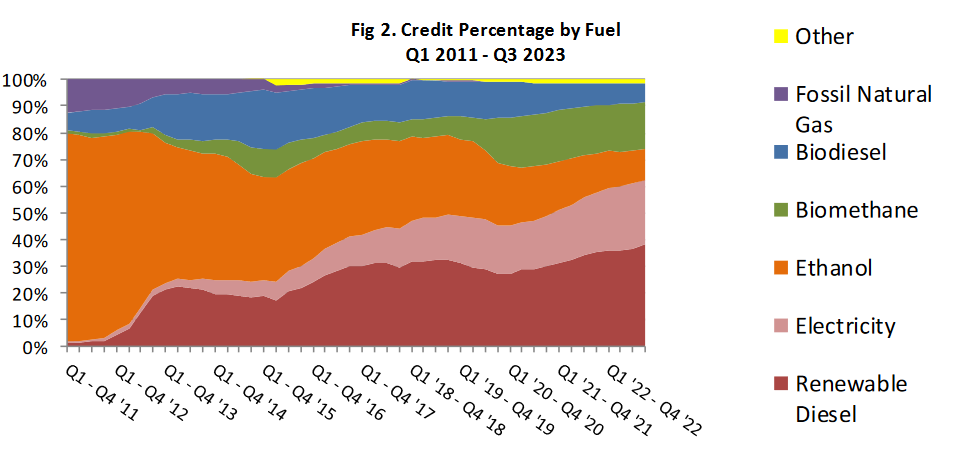
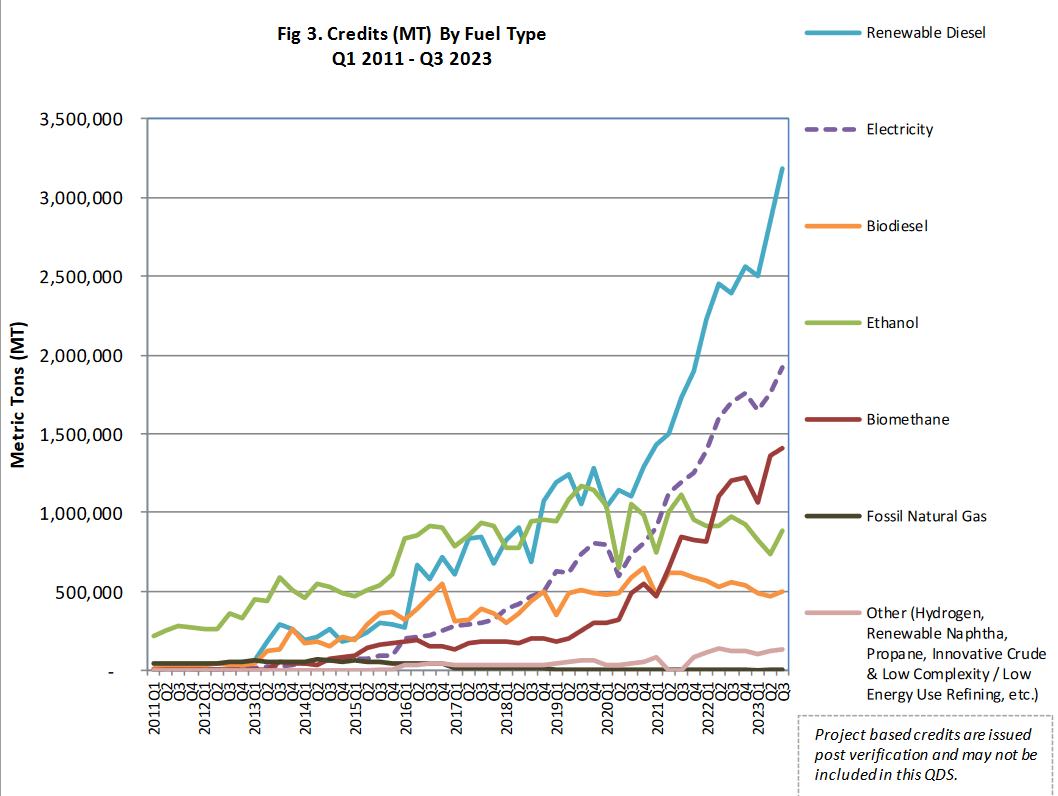
In Q3 of 2023, LCFS credit generation continued to increase, outpacing credit deficits from fuel suppliers. This has continued a trend first seen in Q3 of 2021, where credit generation outpaces deficits, leading to a cumulative bank—the total net accumulated credits—of 20.58 million metric tons (MT) of credits. This credit surplus underscores the success of the LCFS and the widespread adoption of low-carbon fuels across California, which has been steadily growing in recent years.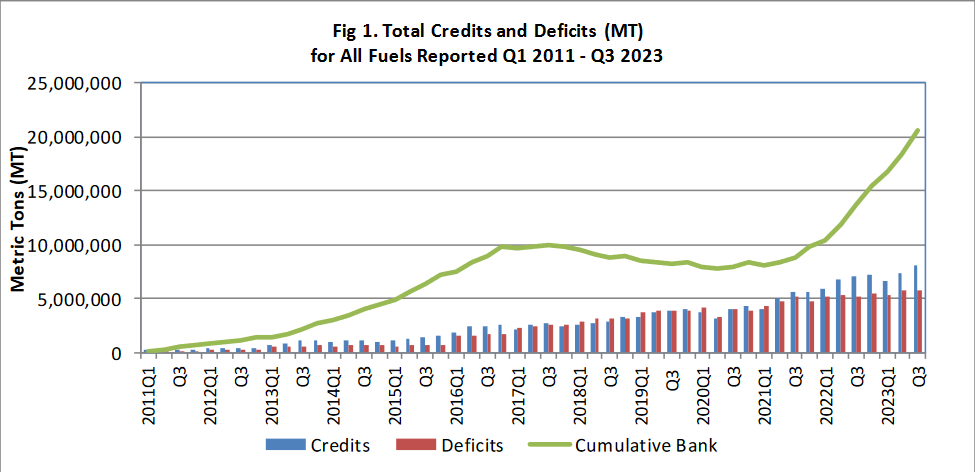
About Us

SCT provides cost-effective telematics and remote power management solutions that optimize motive power fleet and self-service machine efficiency and reduce downtime with essential insights.
Share With Your Network
Popular Posts
Mixed Fleet Telematics: Why Independent Visibility Wins
If Your Platform Only Sees Its Own Trucks, What’s Watching Everything Else?Walk onto most warehouse floors today and you won’t find a single-brand fleet. You’ll find a reach truck from one manufacturer next to a counterbalance from another, an order picker from a third, batteries from a couple different suppliers, and chargers that were installed…
 Katherine Perez
From Study to Savings: What Continuous Fleet Monitoring Actually Finds
The savings aren’t created by the monitoring. They’re revealed by it. Here’s what that looks like in practice — and why the findings consistently surprise even experienced fleet managers. WHAT MOST FLEETS DON’T KNOW THEY DON’T KNOWWalk into almost any warehouse or distribution center and you’ll find a fleet that’s being managed with reasonable care —…
Katherine Perez
Truklink™ Is Here
We talk a lot about clarity at Smart Charging Technologies. Clarity in your data. Clarity in your decisions. Clarity in what your fleet is actually telling you versus what you assumed it was. So it only made sense to apply that same standard to ourselves. Introducing Truklink™ and Truklink PS™ — the next evolution of…
Katherine Perez
What You Didn't Know About Your Fleet — And What You Can Do With It Now.
When continuous fleet monitoring surfaces something unexpected, the instinct is to question the data. Here’s why that moment is actually the most valuable one in the whole process. WHEN THE NUMBERS LOOK DIFFERENTThe monitoring devices have been running for a few weeks. The data is coming in. And some of it doesn’t match what you expected.A…
Katherine Perez
All-In-One Energy Metering Has Arrived — Introducing the IoTEmeter Series by Smart Charging Technologies
One device. Meter, enclosure, cellular connectivity, and a five-year LTE data plan — all included. Here’s what that means for your operation.Orlando, FL – 5/27/26 — Most energy metering solutions are sold in pieces. You buy the meter from one vendor, the enclosure from another, track down a cellular router separately, and then figure out…
Katherine Perez